
Introduction
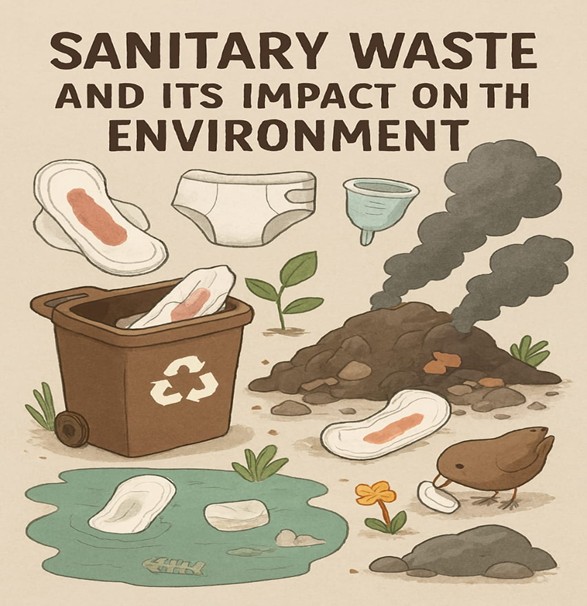
Sanitary waste—primarily sanitary napkins, tampons, panty liners, diapers, and adult incontinence products—has become an unavoidable part of modern life. While these products play a crucial role in maintaining hygiene, dignity, and health, their improper disposal is creating a serious and often overlooked environmental crisis.
With growing awareness around menstrual hygiene and increased usage, the volume of sanitary waste is rising rapidly, especially in developing countries like India.
This blog explores the environmental impact of sanitary waste and practical measures to control and manage it responsibly.
What Is Sanitary Waste?
Sanitary waste includes absorbent hygiene products used to manage menstruation, urinary incontinence, or personal hygiene.
Most commercially available sanitary products are made of plastic, synthetic polymers, superabsorbent chemicals, adhesives, and bleached paper pulp. A single sanitary napkin can contain up to 90% plastic and may take 500–800 years to decompose.
Current Disposal Practices
1. Landfilling
The most common method. Pads and diapers take hundreds of years to decompose and release harmful chemicals into soil and groundwater.
2. Incineration
Often used in urban areas. Burning sanitary waste at low temperatures releases dioxins and furans, toxic pollutants harmful to humans and ecosystems.
3. Open Dumping
Common in rural and peri-urban areas, where waste is discarded in fields or water bodies, creating severe environmental and public health hazards.
Environmental Impact of Sanitary Waste
1. Plastic Pollution
Most sanitary products are non-biodegradable. Improper disposal leads to microplastics contaminating soil, rivers, and oceans, entering the food chain and affecting wildlife and human health.
2. Soil and Water Contamination
Chemicals such as dioxins, fragrances, and absorbent gels leach into soil and groundwater, reducing soil fertility and contaminating drinking water sources.
3. Health Hazards
Sanitary waste carries blood and bodily fluids, making it a biohazard. Waste pickers, sanitation workers, and animals are exposed to infections, skin diseases, and respiratory problems.
4. Air Pollution from Burning
Open burning and low-quality incineration release toxic fumes, contributing to air pollution and long-term health risks.
5. Burden on Waste Management Systems
Sanitary waste clogs sewage systems, blocks drains, and increases landfill pressure. Municipal systems are often not designed to manage this waste separately.
Measures to Control and Manage Sanitary Waste
1. Promote Sustainable and Eco-Friendly Alternatives
- Cloth pads
- Menstrual cups
- Biodegradable sanitary napkins
- Period underwear
These options significantly reduce waste generation and are cost-effective in the long run.
2. Source Segregation and Safe Disposal
- Wrap sanitary waste in paper (not plastic)
- Use separate, clearly marked bins
- Treat as dry or hazardous waste
Separate bins should be installed in schools, workplaces, and public toilets with clear labeling.
3. Improve Waste Treatment Infrastructure
- Install scientific incinerators with emission control systems
- Avoid open burning
- Encourage centralized treatment facilities
- Increase approved treatment units
4. Awareness and Education
Awareness programs should break menstrual taboos, educate communities on environmental impacts, and train sanitation workers on safe handling practices.
5. Policy Support and Corporate Responsibility
- Strict implementation of Solid Waste Management Rules
- Mandatory disposal instructions on products
- Extended Producer Responsibility (EPR)
- CSR support for sustainable menstrual hygiene
Role of Communities and NGOs
- Introduce low-cost biodegradable pads
- Conduct menstrual hygiene and environmental workshops
- Set up pad banks and safe disposal units
- Engage men and boys for shared responsibility
Pratyay Livelihood and Wellness Foundation’s Initiative
Pratyay Livelihood and Wellness Foundation (PLWF) is working on menstrual dignity and eco-conscious waste management in Bengal and Jharkhand through its pilot program Grace Cycle.
- Introduces biodegradable and reusable menstrual products
- Co-designs community-led disposal systems in rural and tribal areas
- Turns disposal into a conscious act of care for the Earth
- Advocates for policy-level change using pilot evidence
This initiative integrates environmental action with dignity, inclusion, and cultural ecology.
Conclusion
Sanitary waste is not just a hygiene issue—it is an environmental, social, and public health challenge. Addressing it requires sustainable product choices, responsible disposal practices, strong policies, and widespread awareness.
Managing sanitary waste responsibly today is an investment in a cleaner, healthier, and more sustainable tomorrow.